Amidst a volatile global economy, supply chain restructuring, and increasingly stringent green standards, Vietnamese businesses face both opportunities and challenges. In an interview with VnExpress, Dr. Le Duy Binh, Director of Economica Vietnam, analyzed the achievements, barriers, and policies, and outlined specific solutions to support the Vietnamese business community in moving up the value chain.(This article was originally published on VnExpress. It has been translated and adapted by WTE.)
Q: After more than three decades of global integration, what achievements has Vietnam made in participating in global supply chains?
A: After more than thirty years of integration, Vietnam has made significant progress. The economy is now among the most open in the world, with total import–export turnover equivalent to nearly 200% of GDP, placing the country among the top 20 nations with the strongest trade performance. Vietnam has signed 17 Free Trade Agreements (FTAs), which have expanded market access and diversified trading partners.
The number of domestic enterprises has continued to grow, reaching nearly one million active businesses, of which more than 10% participate directly in import–export activities. They contribute about 30% of total export turnover and create millions of jobs, playing an essential role in national stability and development.
Vietnam has also become an important destination in regional supply chains, with key industries such as electronics, textiles and garments, footwear, seafood, and agriculture. Many multinational corporations have chosen Vietnam as a strategic link in their global supply networks.
Q: In your view, what advantages help Vietnam attract foreign investment?
A: Vietnam possesses several important competitive advantages.
First is political stability. This is a foundational factor that creates a safe and predictable investment environment—something international investors always prioritize.
Second, Vietnam’s strategic geographic location and its extensive network of 17 FTAs provide strong connectivity to major markets. These agreements offer substantial tariff advantages, positioning Vietnam as a critical commercial gateway for the region and the world.
Third, the country’s abundant labor force and competitive labor costs remain appealing. Although the advantage of low-cost labor is gradually diminishing, the large workforce continues to be a strong point.
Lastly, the government’s efforts in administrative reform, infrastructure development, and digital transformation are creating increasingly favorable conditions for manufacturing and investment activities in Vietnam.
Q: Where does Vietnam currently stand in the global supply chain?
A: Despite notable achievements in scale, the true position of Vietnamese enterprises in global supply chains remains relatively modest. Vietnam is still positioned at the lower end of the “smiling curve,” concentrating on labor-intensive, low-value-added stages such as processing, assembly, and manufacturing.
Meanwhile, higher-value segments—such as R&D, design, branding, and distribution—are still dominated by foreign corporations. Vietnam today is an important production link but does not yet have the capability to shape or lead the game. To put it bluntly, we are effective “workers,” not yet true “owners” of the value chain.
Q: You just mentioned that despite many achievements, Vietnam remains “stuck” at the bottom of the smiling curve. What barriers prevent Vietnamese enterprises from moving up the value chain?
A: There are numerous intertwined barriers that make it difficult for Vietnamese enterprises to break through in the global supply chain.
First, the most critical weakness lies in the underdeveloped and fragmented supporting industries, which lack strong linkages. This leads to the paradox of “importing to export,” resulting in low value-added products and making it harder for firms to meet rules of origin in free trade agreements.
Second, Vietnam’s logistics costs remain significantly higher than those of regional peers, reducing the competitiveness of its products. Infrastructure—including ports, warehousing, and customs procedures—has improved but still does not keep pace with the rapid expansion of trade.
Third, labor productivity and innovation capacity remain limited. Many enterprises are hesitant to invest in technology upgrades and brand development.
Lastly, capital constraints continue to be a core bottleneck. Technological modernization and scaling up require long-term financial resources, but suitable credit products and venture capital funding are still limited, especially for small and medium-sized enterprises.
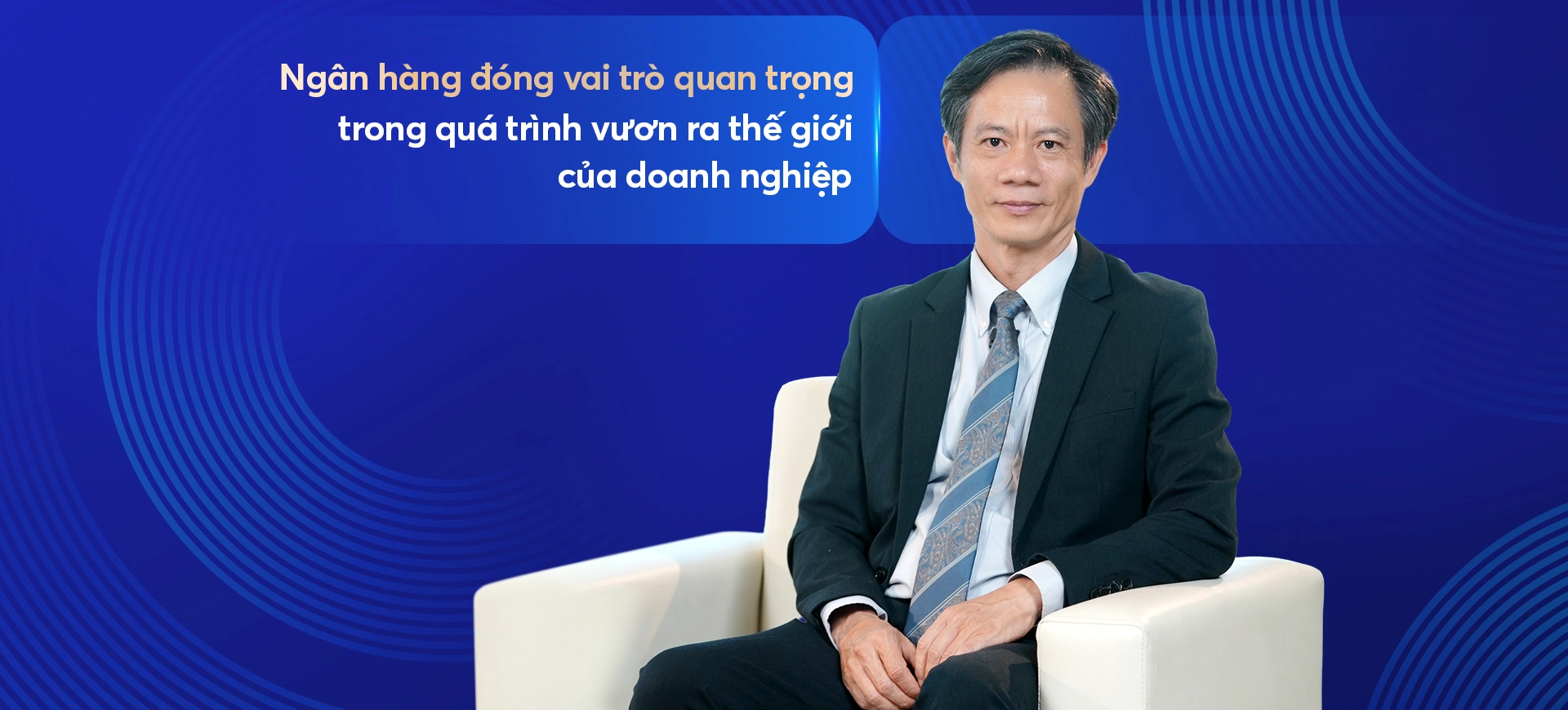
Q: What opportunities do new supply chain trends present for Vietnam?
A: The world is changing rapidly, and these shifts bring both opportunities and challenges for Vietnam.
On the opportunity side, supply chain restructuring—such as nearshoring and friend-shoring—is opening space to attract high-quality investment, especially from corporations seeking safe, stable, and capable production locations. With political stability and deep integration into global trade, Vietnam is emerging as a top choice.
Beyond market and policy advantages, the role of the financial sector is also evolving in a positive direction. Several major banks are integrating more deeply into global supply chain networks to support domestic businesses.
For example, MB is strengthening cooperation with major Korean and Taiwanese corporations such as Samsung and LG. Beyond trade finance, the bank also advises and connects Vietnamese firms to participate in these corporations’ supply chains. This is a noteworthy development that shows Vietnam’s financial system is gradually becoming more embedded in international value networks, helping enhance the position of Vietnamese enterprises in global production chains.
MB participates in the Vietnam–Korea Economic Forum.
On the pressure side, as markets expand, competition becomes fiercer. The advantage of low-cost labor is diminishing, and many emerging economies are joining global supply chains. The resurgence of trade protectionism increases the risk of trade defense cases, requiring enterprises to be more professional in risk management and origin documentation.
More importantly, green standards—such as the EU’s Carbon Border Adjustment Mechanism (CBAM) and emerging ESG requirements—are becoming mandatory “entry tickets” to major markets. This forces enterprises to invest in green transformation, supply chain transparency, and risk governance. While these efforts raise short-term costs, they also drive companies to strengthen their competitiveness in a more sustainable way.

Q: Capital has always been a major bottleneck for businesses, especially SMEs. In your view, how should the banking system shift its mindset and approach to truly unlock capital flows that support enterprises?
A: To remove the capital “bottleneck,” the financial–banking system needs to transform from a mere “lender” into a strategic partner and an indispensable part of the business-support ecosystem.
First, comprehensive and flexible financial solution packages must be developed. Instead of stopping at lending, banks should accompany businesses throughout the entire value chain—from production financing and cash-flow management to international payments, trade finance, and risk insurance. Several institutions, such as Military Commercial Joint Stock Bank (MB), have implemented integrated “full-service” packages on digital platforms, helping businesses reduce costs, shorten transaction time, and operate more efficiently in a globalized environment.
For example, recently MB refinanced more than VND 4,000 billion and granted over VND 5,000 billion in credit limits to companies under Seojin System Group (Korea), a major manufacturer. Beyond capital provision, MB also offers payroll services and personal financial solutions for over 11,000 employees of Seojin, optimizing the financial operations of the group’s entire ecosystem.
MB is a trusted partner of many FDI enterprises in Vietnam.
Second, support should be expanded to more target groups, especially SMEs. Many banks now offer dedicated programs tailored for specific segments to open up capital flows across entire supply chains.
At MB, the bank has supported operational transformation via digital platforms by deploying fully automated, unsecured loan products for micro SMEs. The system automatically screens, scores, and approves loans without manual intervention. This solution expands access to formal capital for hundreds of thousands of small private enterprises—a sector that generates more than 60% of the country’s jobs.
MB supports SMEs, household businesses, and small traders in digital transformation.
Q: Green transformation is no longer an optional “bonus” but has become a mandatory “passport” for Vietnamese enterprises to remain in global supply chains. Given that businesses still face resource constraints, what should the banking system do to promote sustainable development?
A: When business resources are limited, the banking system must proactively lead capital flows toward sustainable development—establishing ESG (environmental, social, governance) criteria and directing capital into sectors with broad spillover effects such as renewable energy and green infrastructure.
MB is a strong example of this strategic mindset. The bank views green finance not as a short-term movement but as a long-term strategy to align private capital with the Government’s core development goals.
This leadership is clearly demonstrated through MB’s role in arranging financing for major energy projects, helping address infrastructure constraints so that businesses can confidently adopt clean production. A notable example is MB’s VND 5,500 billion financing package for the Savan 1 Wind Power Project (Laos) under T&T Group, contributing to the implementation of Vietnam’s Power Development Plan VIII and ensuring energy security for the North. The bank also invested VND 800 billion in the Phuoc Huu – Duyen Hai 1 Wind Power Project in Ninh Thuan.
Mrs. Nguyen Thi Thanh Binh, Chairwoman of Savan 1 Wind Power Co., Ltd., and Mr. Pham Nhu Anh, CEO of MB Bank, sign the financing arrangement for the Savan 1 wind power project.
According to statistics, MB’s green credit and ESG investment portfolio currently reaches around VND 65,000 billion per year, accounting for nearly 8% of its total outstanding loans, with the renewable and clean energy sector alone making up VND 45,700 billion.
More importantly, MB has demonstrated that green transformation is a profitable investment— not a financial burden. Customer-generated value in this segment brings the bank nearly VND 15 billion per month. This is the most practical incentive to encourage businesses to believe in and commit to the path of sustainable development.

Q: What is the role of the Government in helping elevate Vietnamese enterprises’ position?
A: The Government has been making efforts to improve the investment environment, reform administrative procedures, and upgrade logistics infrastructure, creating favorable conditions for enterprises. However, to truly lift Vietnamese enterprises in global supply chains, more breakthrough and long-term policies are needed.
First, it is essential to maintain a transparent, low-cost, and stable business environment to encourage long-term investment. At the same time, both physical and digital infrastructure must be developed in a synchronized manner—from transportation and logistics to open data platforms that enhance connectivity, especially amid global supply chain shifts.
Second, stronger linkages between FDI enterprises and domestic companies must be encouraged, promoting technology transfer, workforce training, and the development of supporting industries. When domestic businesses gain the capability to deeply integrate into multinational supply chains, added value will truly remain in Vietnam.
Third, investment in R&D and innovation should be incentivized through flexible mechanisms such as sandboxes—especially in emerging fields like digital finance, renewable energy, and high technology. Meanwhile, cultivating a high-quality workforce must become a long-term national strategy aligned with industries that generate high value.
If these steps are implemented synchronously, Vietnam can move from merely “participating” to “leading” key segments of the global supply chain.
Q: Many Asian economies like South Korea and Singapore rose successfully from low-value manufacturing. What lessons can Vietnam learn from them?
A: South Korea developed global “national champions” like Samsung and LG. Taiwan mastered the semiconductor industry with TSMC. Singapore leveraged its strategic location to become a global finance and logistics hub. Though their paths differ, they share common pillars: persistent investment in technology, education, and a transparent institutional framework to elevate national competitiveness.
The biggest lesson for Vietnam is this: strength must come from within.
We must nurture the domestic private sector, fostering “leading cranes”—large enterprises capable of guiding entire industries. At the same time, Vietnam must commit to long-term, strategic investment in R&D, high-quality human resources, and supporting industries. Equally important is building a complete support ecosystem in which the Government develops enabling policies, research institutes provide knowledge, and financial institutions accompany enterprises with capital.
Q: Based on these international lessons, what must Vietnamese enterprises change to move beyond being a “factory” and become regional hubs of innovation, design, and logistics within the global supply chain?
A: Innovation is the key to future growth. It is the element that allows enterprises to build unique and sustainable advantages in an increasingly competitive global market.
Innovation is not only about creating new products—it is about new thinking, new management methods, and new forms of collaboration. Vietnamese enterprises must shift from a “follow” mindset to an “ownership” mindset. We cannot compete forever based on cheap labor or wait for outsourcing orders. To rise, we must master technology, design, and branding—the highest-value segments of the supply chain.
To achieve this, businesses must first standardize production processes and attain essential international certifications such as ISO or ESG-related standards. Second, they must invest long-term in innovation—accepting risk to build R&D capacity, digitize operations, and develop high-quality talent. Future competitiveness will depend not on low costs but on knowledge, technology, and the ability to create unique value.
Additionally, enterprises must shift from isolated operations to ecosystem-based collaboration—strengthening cluster development, linking with FDI firms, research institutions, universities, and financial systems to jointly address challenges related to capital, technology, and markets. When these links operate cohesively, national competitiveness will be significantly enhanced.
Finally, integration is an endless journey. Never be satisfied with the present. The world changes every day. Only continuous learning, innovation, and the ambition to rise will enable Vietnamese businesses to evolve from “factories” into regional centers of innovation and logistics—reinforcing Vietnam’s position on the global economic map.

Source: Vietnamese Businesses Must Innovate to Move Beyond Assembly-Level Roles
![[Events] Vice President of HR at KMS Technology to join Leader Talks: Fostering Diversity and Equity in Tech Workplace](https://vcystvqnqlquncjkhfqk.supabase.co/storage/v1/render/image/public/cm86yzxje006dqu90iz4rc2vg/Users/528093_imagejpeg?width=600&quality=80&resize=contain)
![[Events] Leader Talks: “Inclusive Leadership: Fostering Diversity and Equity in the Tech Workplace”](https://vcystvqnqlquncjkhfqk.supabase.co/storage/v1/render/image/public/cm86yzxje006dqu90iz4rc2vg/Users/94476_imagejpeg?width=600&quality=80&resize=contain)
![[Latest News] Vietnam’s NIC Director: NIC Has the Mandate to Attract Meta, Google, NVIDIA & Qualcomm](https://vcystvqnqlquncjkhfqk.supabase.co/storage/v1/render/image/public/cm86yzxje006dqu90iz4rc2vg/Users/511693_imagejpeg?width=600&quality=80&resize=contain)
![[Latest News] Vietnam Tops the World in Creative Goods Exports](https://vcystvqnqlquncjkhfqk.supabase.co/storage/v1/render/image/public/cm86yzxje006dqu90iz4rc2vg/Users/560777_imagejpeg?width=600&quality=80&resize=contain)
![[Latest News] CyberCon Asia 2025 Cybersecurity Event Discusses “AI versus AI”](https://vcystvqnqlquncjkhfqk.supabase.co/storage/v1/render/image/public/cm86yzxje006dqu90iz4rc2vg/Users/659822_imagejpeg?width=600&quality=80&resize=contain)
![[Events] Invitation to join the Women in Tech® Vietnam Delegation to the Women In Tech APAC Summit 2025](https://vcystvqnqlquncjkhfqk.supabase.co/storage/v1/render/image/public/cm86yzxje006dqu90iz4rc2vg/Users/26163_imagejpeg?width=600&quality=80&resize=contain)
![[Events] Advisory Board & Executive Board Regular Meeting of Women in Tech® Vietnam (WIT) and Women Tech Entrepreneurs (WTE)](https://vcystvqnqlquncjkhfqk.supabase.co/storage/v1/render/image/public/cm86yzxje006dqu90iz4rc2vg/Users/897421_imagejpeg?width=600&quality=80&resize=contain)
![[Latest News] Vietnam’s Growing Prominence in Cybersecurity: Host of ACM AsiaCCS 2025](https://vcystvqnqlquncjkhfqk.supabase.co/storage/v1/render/image/public/cm86yzxje006dqu90iz4rc2vg/Users/8666_imagejpeg?width=600&quality=80&resize=contain)
![[Latest News] Ho Chi Minh City’s Innovation Startup Center Opens as New Ecosystem Hub](https://vcystvqnqlquncjkhfqk.supabase.co/storage/v1/render/image/public/cm86yzxje006dqu90iz4rc2vg/Users/523193_imagejpeg?width=600&quality=80&resize=contain)
![[Events] The Art of Sake: Connecting Businesses & Cultures](https://vcystvqnqlquncjkhfqk.supabase.co/storage/v1/render/image/public/cm86yzxje006dqu90iz4rc2vg/Users/210348_imagejpeg?width=600&quality=80&resize=contain)